New seat of the Free University of Bolzano in Brunico

New seat of the Free University of Bolzano in Brunico

New seat of the
Free University
of Bolzano in Brunico

Place

Bruneck

Client

Autonomous
Province
of Bolzano

Architectural design

Roland Baldi Architects
Thomas Simma

Team

Roland Baldi
Karin Kretschmer
Yvonne Lindner
Sigrid Fischer-Colbrie

Competition

2005

End of construction

2007

Photo

René Riller

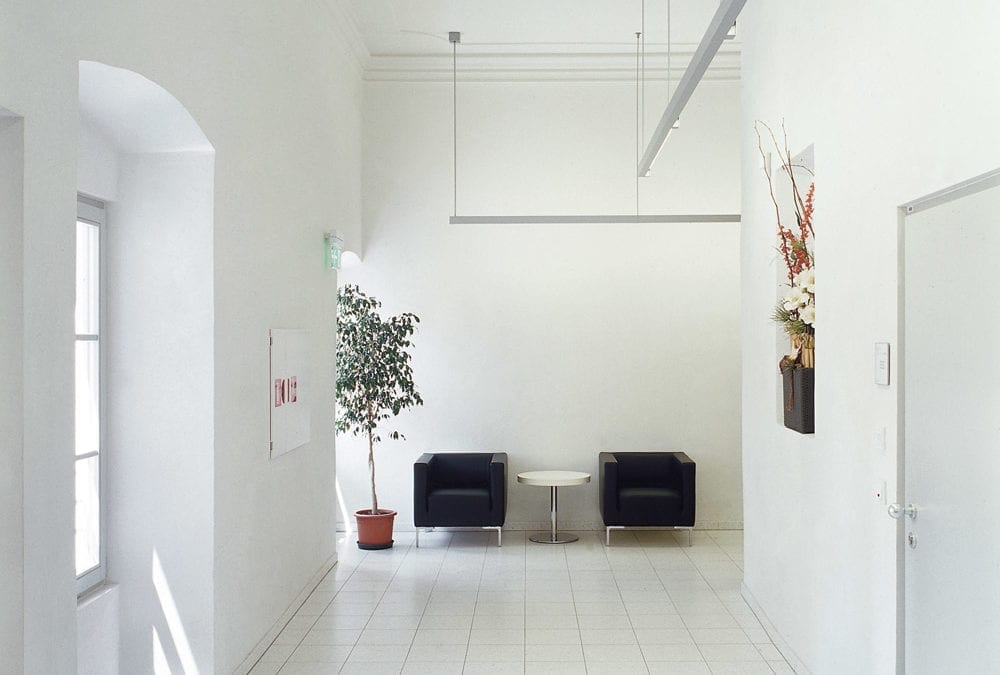
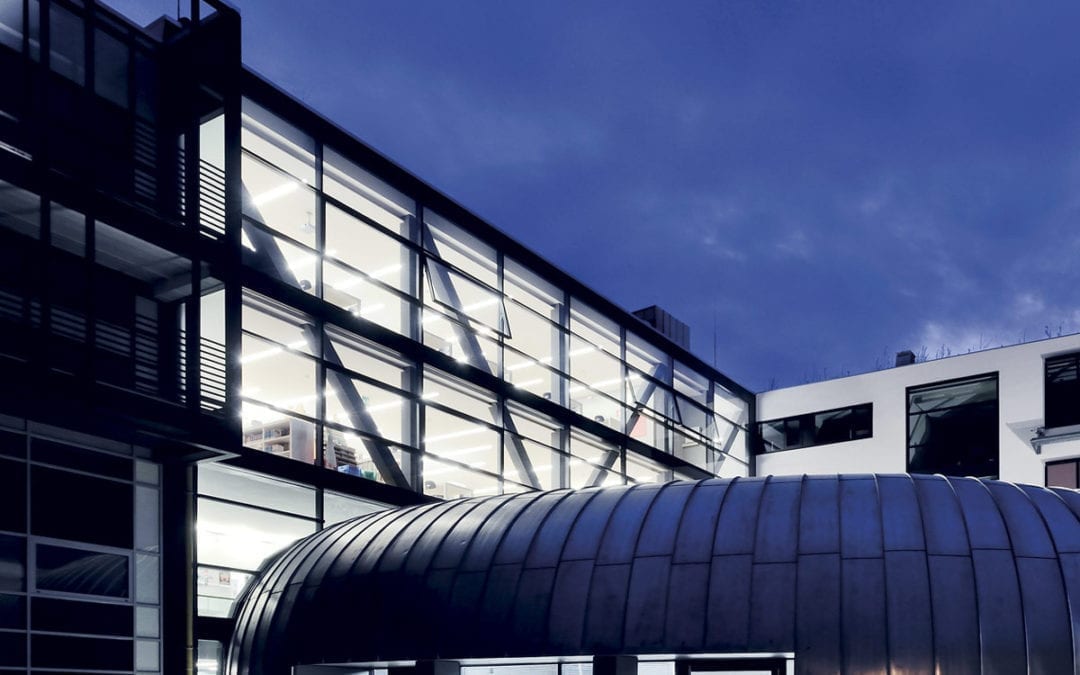
For the organisation of The Free University of Bolzano’s Tourism Management university course, the existing building of the former mathematical-scientific high school in Brunico, which stands under historical monument protection, was adapted and extended. The project was divided into the following three phases: reconstruction and restoration of the existing space, construction of a new staircase as well as the construction of a new underground auditorium with ancillary spaces, which can also be used as a public meeting hall.

Ropeway Merano 2000

Ropeway Merano 2000

Ropeway Merano 2000

Place

Merano

Client

Merano 2000
Funivie SpA

Architectural design

Roland Baldi Architects

Team

Roland Baldi
Karin Kretschmer
Harald Kofler
Johannes Niederstätter

Competition

2009

End of construction

2010

Foto

Oskar Da Riz
Frieder Blickle

Prize

2014
Iconic Award Winner
Premio Architettura
Città di Oderzo, Mention

2013
Premio d’Architettura Alto Adige

1° premio categoria turismo
ISR Architektur Award, shortlist

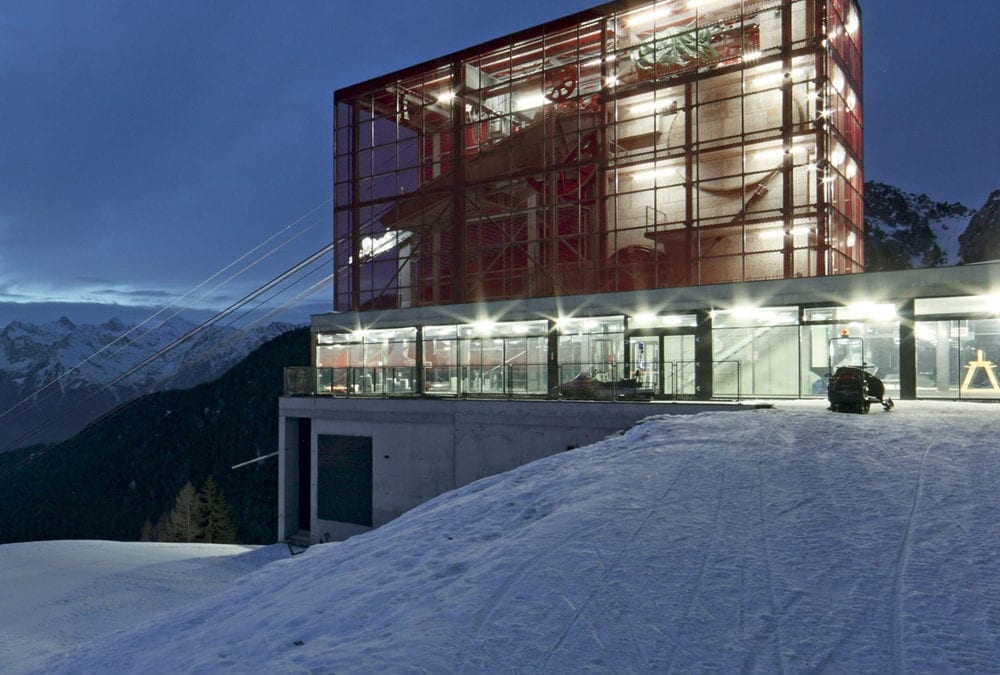
The cable car infrastructure is situated on the margins of Merano and connects the city with the nearby skiing Area of Merano 2000. Autonomous in presence, the design consists of two terminals – one in the valley and one at the summit, both maintain a common architectural language through palette and form. Made transparent through materials and colour, the station’s layout and scheme can be read intuitively by its users. The vibrant red claddings, which confidently protrude from the structures, become an identity-forming address for the company and a striking landmark that provides orientation for mountain sports enthusiasts in both summer and winter. The terminal’s other functions (panoramic cafe, lounge, waiting area, entrance foyer) are arranged throughout the rest of the three-storey station. The graphic slope of the roof communicates a directional connection between the two terminals. Both stations feature a metal cladding that exposes the lift’s mechanical systems. At night, this porous covering allows the terminal to glow and become an illuminated focal point in the landscape.

District Heating Plant Klausen

District Heating Plant Klausen

District Heating Plant
Klausen

Place

Klausen

Client

District heating plant Klausen GmbH

Architectural design

Roland Baldi Architects

Team

Roland Baldi
Thorsten Götz
Rodolfo Zancan

Competition

2004

End of construction

2007
Photo

Oskar Da Riz

Prize

2008
Premio Architettura Città di Oderzo, Mention 

2009
Premio Internazionale Architettura Sostenibile, shortlist 2009

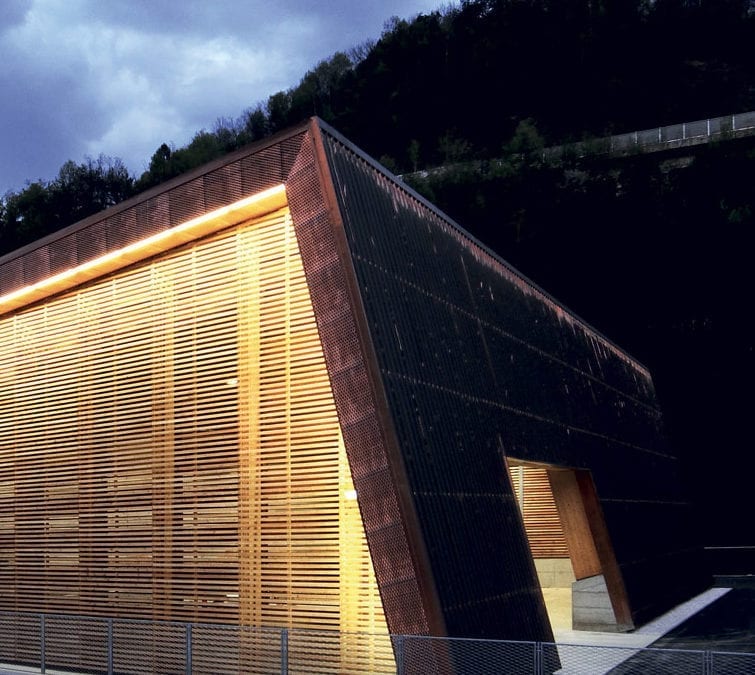
The district heating plant is located at the edge of Chiusa, on the site of Val Gardena’s former railway station, between motorway, main road and railway. The project is a result of a design competition which was undertaken and won by the firm. The building rises from the ground like a large wedge-like wing, the dynamic volume of the sloping roof sits between the viaduct and the train sheds of the old Gardena railway. On the two narrow sides of the building, the roof edges descend to the ground. The large glazed façade reveals a view of the heart of the plant and its heat generators. The sculptural appearance of the building is underlined by a sophisticated lighting design and contains three interior areas: woodchip store, boiler room and cogeneration plant. The materials that dominate are the copper of the roof, the wood of the roof’s supporting structure and of the lamellas on the façade. These brown tones are contrasted by the grey of the exposed concrete of the ceilings, walls and floors, combined with the bright green linoleum floors in some areas.

Public Construction Yard Salto Sciliar

Public Construction Yard Salto Sciliar

Public Construction Yard
Salto Sciliar

Place

Bolzano

Client

Autonomous Province of Bolzano

Architectural design

Roland Baldi Architects  Thomas Simma

Team

Roland Baldi
Thorsten Götz
Thomas Kienzl
Sigrid Fischer-Colbrie

Competition

2005

End of construction

2008

Photo

René Riller
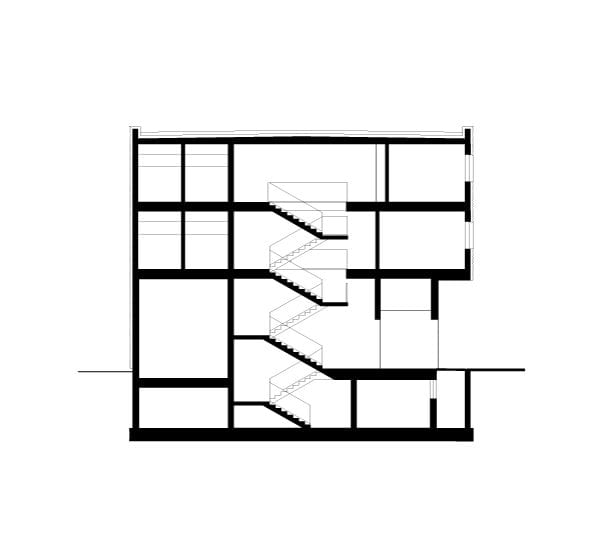
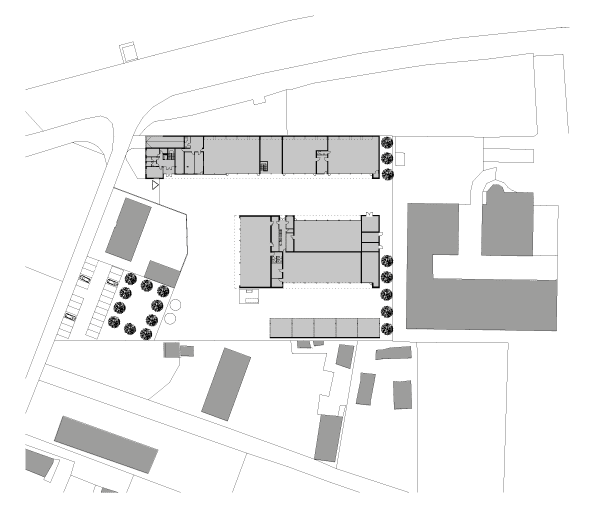
The yard Salto Sciliar consists of two edificial bodies and a canopy, which are spread parallel to the northern and southern borders of the plot, forming clear and wide open spaces. The northern building, indicating the entrance to the plot, contains offices as well as garages and workshops. The second building houses further garages, several storage rooms and their related offices, whilst the changing rooms and the communal area are situated on the upper floor. The charcoal and orange colour scheme comes from the new Corporate Design for the logistical street sites in South Tyrol, and is used with the intention to emphasise the two building elements (the roof and the volume beneath), guaranteeing easy recognition. The public construction yard Salto Sciliar is part of a group of logistical yards based on a modular system: its principle consists of a single level garage-storage unit and another one for administration, single or multiple level depending upon requirements. These units are aligned in a row; the top unit being assigned for administration.

Angela Nikoletti Square

Angela Nikoletti Square

Angela Nikoletti Square

Place

Bolzano

Client

Autonomous Province of Bolzano

Architectural design

Roland Baldi Architects

Team

Roland Baldi
Thorsten Götz
Harald Kofler
Karin Kretschmer

Photo

Oskar Da Riz

End of construction

2011
Prize

Premio d’Architettura Alto Adige, shortlist 2013
Angela Nikoletti Square is located in the centre of the Rosenbach district and consists of a technical school for social professions, cultural centre, fire station, dorm and kindergarten. The square opens towards Claudia-Augusta street and naturally blends in with the existing and newly designed surroundings. Walkways connect the square with the park and a new residential development to form a harmonious whole. The square provides access to the district centre and the adjacent park. It serves as a junction and meeting place for the inhabitants and also offers space for outdoor events, which can extend into the foyer and the cultural centre’s multifunctional hall. Two-tone zebra pattern cobblestones have been created using white Lasa marble and black basalt cubes to decorate the square. Wave-shaped elevations of these cobblestones form seating and reclining areas of various heights and inclinations with a tree-shaded, hill-like seating island which invites its inhabitants to linger.